The Cost of Beauty
Mental Health in Industries- Hair & Beauty
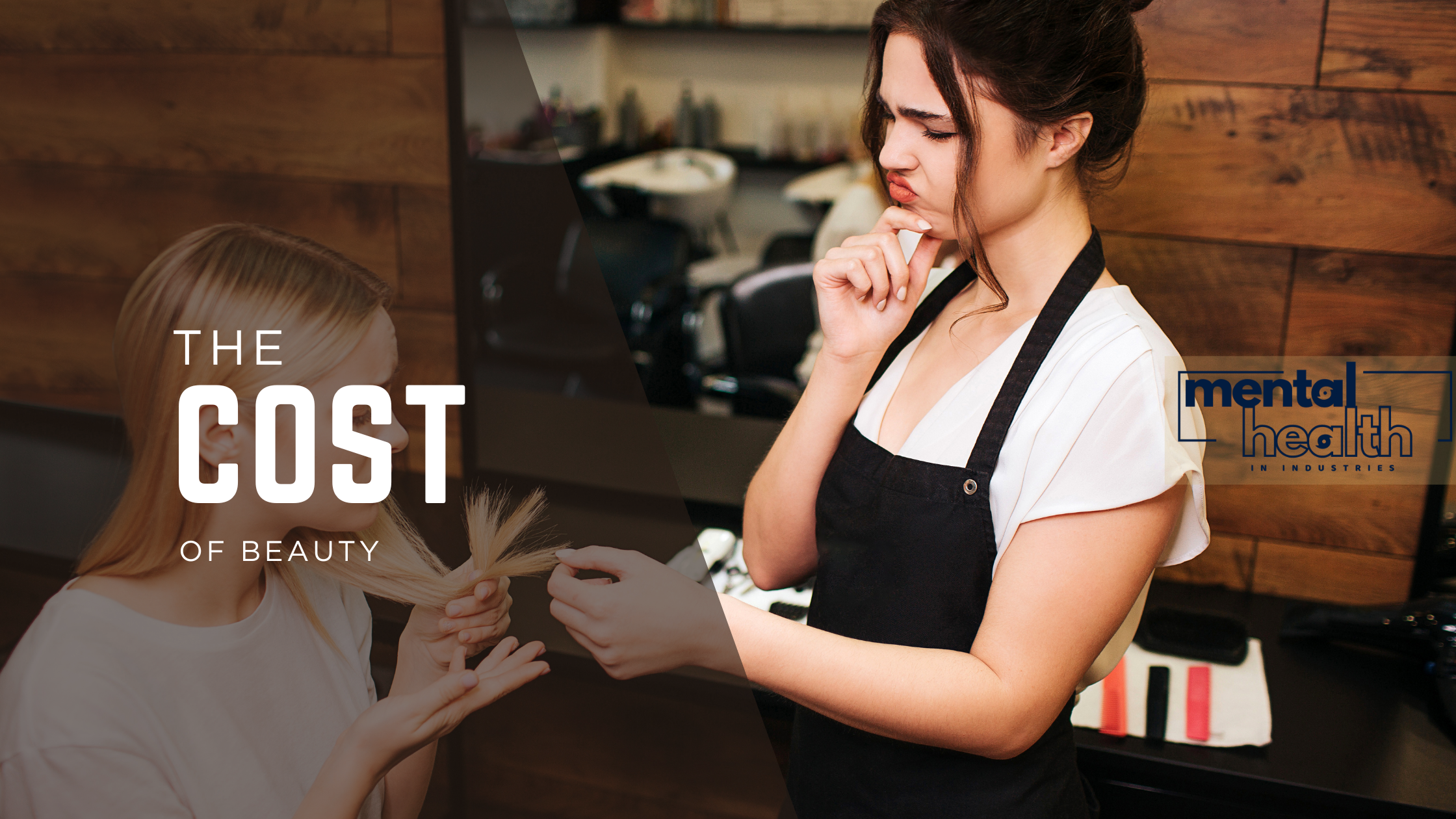
Mrs. Simons sits in the reclining chair, watching your face in the mirror, armed with a sweet yet judgemental smile. There is no cause for concern though, she may complain loudly if she is unhappy, it’s her prerogative, as she calls it. But she has only ever complained once about your cut.
She makes herself comfortable. You drape the gown over her, connecting it behind her neck, under her hair.
After confirming she wants the usual cut and perm, she opens up without any warning and tells you all about her cancer diagnosis. She tells you this to make herself feel better. It reminds her she is strong.
Or she tells you that her daughter is in an abusive relationship.
Or she tells you about her husband and how lazy her is now he has retired.
Or she tells you about her sick and dying pet.
Hair? You know what you are doing.
And sure, you know what Mrs. Simons is like. But today, today isn’t the best day. You have your own problems and coming to work was meant to be a distraction. Aren’t you meant to feel safe in your place of work? What issue is the next client going to bring? Or the one after that? Will you hear trauma once, or five times today? … every day… for years!
When people feel comfortable, they tend to open up. Not all of us, but especially those seeking a connection. And people feel a level of trust with those they turn to, to feel better about themselves. Hair dressers, beauticians, etc.
But despite being wonderful skilled workers, who may very well be ready and willing to gossip, even listen to your gripes, they are not trained counsellors.
Even counsellors have someone we can talk to. Listening to some stories come with a heavy weight. Some affect people more than others.
But people in the beauty industry may not have that support. So how are they meant to deal with other people trauma dumping on them.
Recently we have been in touch with a few people in this industry, it was discovered that it may not be the number 1 cause for staff turnover, however it is a factor. Trauma dumping and mental burn out. So, what can someone like me do about this to help?
With counselling qualification & experience, mental health training and the fun part, public speaking experience, we are putting together a short online training program salons can use as part of their induction process to support their staff and their mental health journey within the salon. Fingers crossed we can help even just one person (…or more than one) continue to work in the industry they chose to get trained in.
This way, next time Mrs. Simons comes in to the salon, staff are empowered with knowledge and skills to be able to speak up if needed, or to not take someone elses trauma on-board. Because no one should feel alone, overwhelmed or responsible for carrying the weight of someone else’s trauma while simply trying to do their job.
In an industry where there is such a competitive culture, not only do we need to build up staff, but we want the good staff to stay. Without burning out. Not overwhelmed with other people’s issues. But happy, healthy, and ready to listen to the next client. Because supporting others shouldn’t cost your own wellbeing.